




Over the years, The Foundation Works has inspected thousands of homes 70 years or older in Southern California. When it comes to older homes, the roof and the foundation are often focal points of concern. Over time, the integrity of a home’s foundation can be compromised due to various factors, including environmental conditions, construction quality, and the natural aging process.
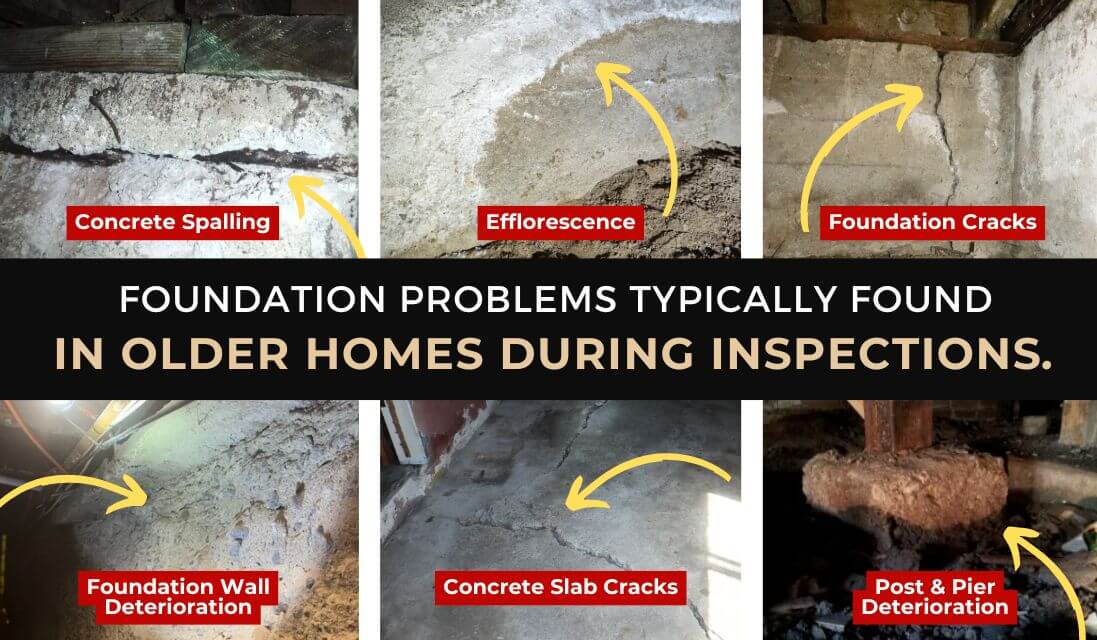
During foundation inspections, our inspectors often encounter six issues commonly found in older homes. Read this article to learn about these issues and why addressing them is crucial for maintaining the safety and longevity of an older home.
1. Concrete Spalling
Concrete spalling is a common issue where the surface of the concrete starts to peel, flake, or chip away. This occurs when the steel reinforcing bars within the concrete begin to corrode, causing the surrounding concrete to crack and break off. Spalling not only affects the aesthetic appeal of the foundation but also compromises its structural integrity. It is essential to address this issue promptly to prevent further deterioration.
2. Efflorescence
Efflorescence is the white, powdery substance that often appears on the surface of concrete or masonry. It is caused by water seeping through the concrete, dissolving salts within the material, and then evaporating, leaving the salts behind. While efflorescence itself is not structurally damaging, it indicates moisture intrusion, which can lead to more severe problems like mold growth, wood rot, and deterioration of the foundation.
3. Cracks in the Foundation
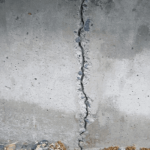
Foundation cracks are among the most concerning issues discovered during inspections. They can range from hairline fractures to significant gaps and can occur for various reasons, including soil movement, settling of the house, or changes in moisture levels. Not all cracks are structurally significant, but they should be evaluated by a professional to determine their severity. Vertical cracks may indicate settling, while horizontal or diagonal cracks could be signs of more serious structural issues.
4. Foundation Wall Deterioration
Over time, the materials used in a home’s foundation can deteriorate due to exposure to the elements, poor maintenance, or the natural aging process. Deterioration can manifest in various forms, such as crumbling concrete, weakened mortar joints, or rotting wood in post and pier foundations. This degradation can reduce the foundation’s ability to support the home, leading to potential safety hazards if not addressed.
5. Cracks on the Concrete Slab
Cracks on slab concrete are another common issue found in older homes. These cracks can occur due to a variety of factors, including shrinkage as the concrete cures, thermal expansion, and contraction, or soil movement beneath the slab. While small, narrow cracks are often not a cause for concern, larger or widening cracks may indicate a more serious issue with the foundation’s stability. Homeowners typically find cracks like these on garage floors or the subfloor when remodeling or renovating. Read more about cracks on concrete slabs here.
6. Post & Pier or Cripple Wall Deterioration
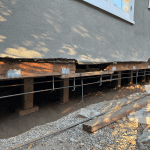
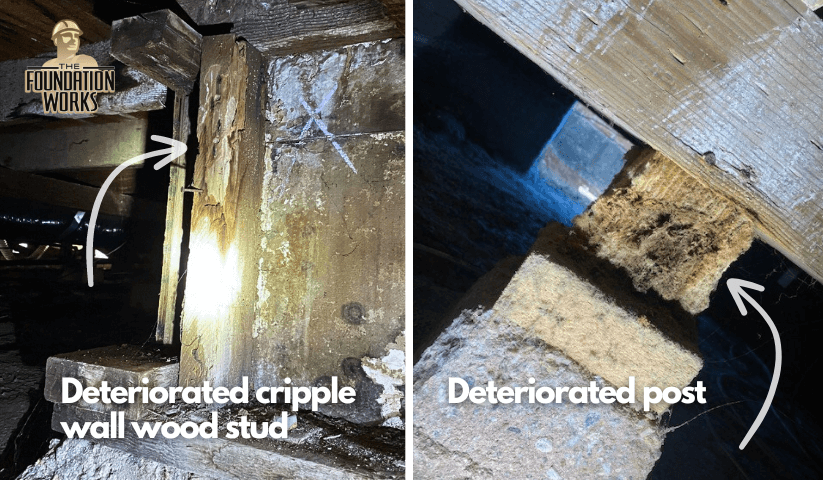
In older homes with post and pier foundations, deterioration of the wooden posts and piers is a frequent issue. These components can rot, weaken, or shift over time, especially if they have been exposed to moisture or termite activity. Deteriorating posts and piers can lead to uneven floors, doors, and windows that don’t close properly, and even potential collapse in severe cases.
Foundation issues in older homes are common, but they can be effectively managed with timely inspections and proper maintenance. Addressing problems like concrete spalling, efflorescence, foundation cracks, deterioration, slab cracks, and post & pier deterioration early on can save homeowners from more extensive and costly repairs down the line. If you’re living in or considering purchasing an older home, schedule a foundation inspection inspection. This is a crucial step in ensuring the long-term stability and safety of your property.
