




For most of us, our home is our biggest investment. It’s not just where we live; it’s where we build our lives, support our families, and store our possessions. The foundation is literally what keeps it all together, playing a crucial role in maintaining the structural integrity of your home. So, what about foundation settlement? You’ve probably heard that all homes settle over time to some degree, but how much settlement is “too much?” In the video below, we go over the tell-tale signs of foundation settlement that may be cause for immediate attention from a foundation repair specialist.
4 Signs of Foundation Settlement Every Homeowner Should Know
Recognizing these signs early can help you address foundation issues before they become severe and costly. If you observe any of these warning signals, it’s crucial to consult with a professional foundation repair company to assess the situation and recommend appropriate solutions. Regular inspections and maintenance can go a long way in preserving the structural integrity of your home and ensuring its longevity.
1. Cracks Above Windows and Doors
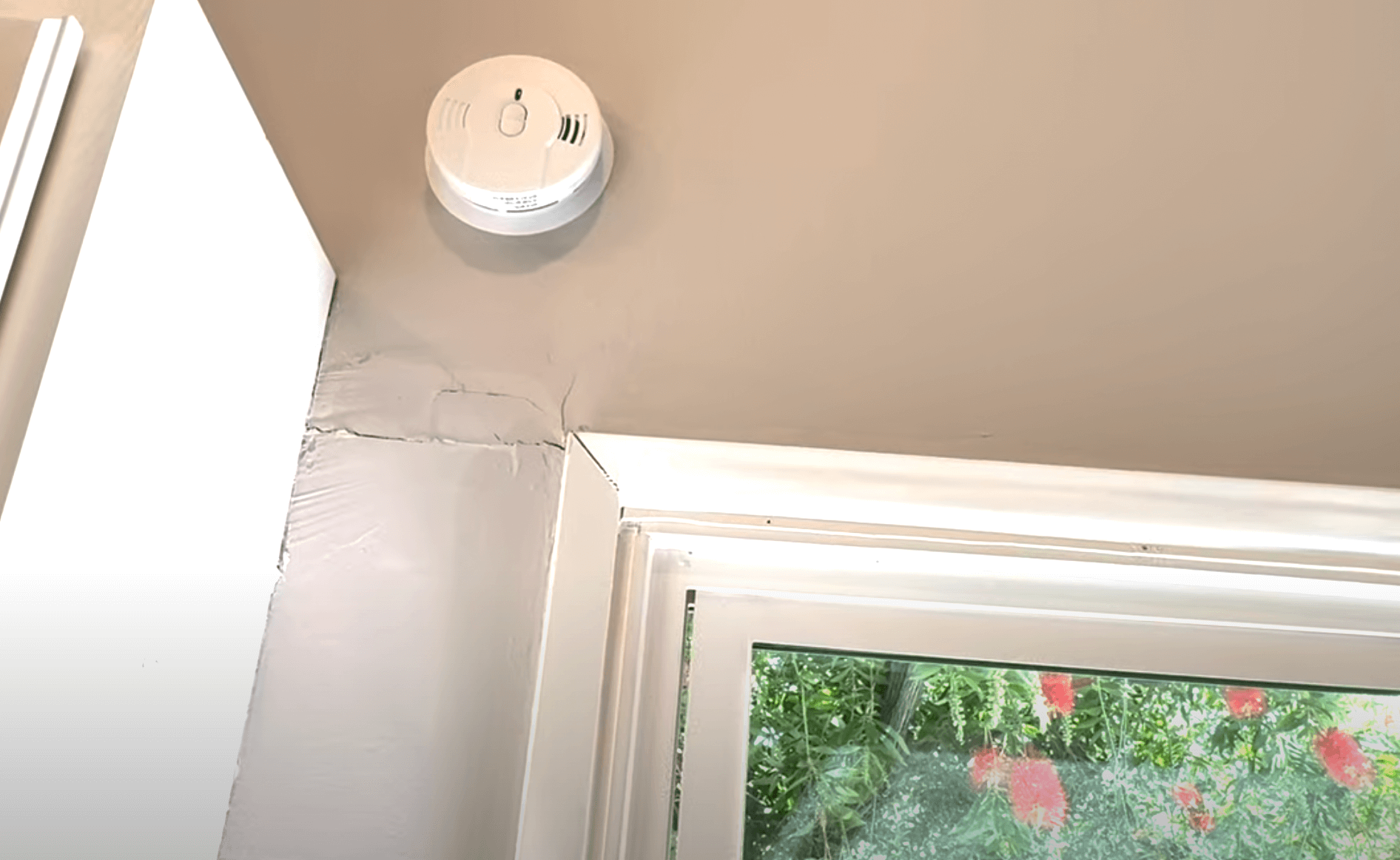
One of the most common signs of foundation settlement appearance of cracks s, and in this first example cracks around and above windows and doors where the structural load is concentrated. These cracks can be vertical, horizontal, or stair-step and typically indicate movement within the foundation. While small cracks are often normal, large or widening cracks should be examined by a professional. You can read more about the types of cracks you should look out for in this article.
2. Cracks in the Drywall
Cracks in drywall are often a telltale sign of foundation settlement. As the foundation shifts or sinks, it causes the structure of the house to move, leading to stress on the walls. These cracks may start small but can widen over time if the underlying foundation issues are not addressed. Identifying and repairing these cracks (not simply covering or painting them over) can help prevent more severe damage and maintain the structural integrity of the home. For comprehensive analysis and repair solutions, it’s advisable to consult a foundation repair specialist and schedule an inspection.
3. Uneven, Sloping, or Bouncy Floors
If you notice that your floors are uneven, bouncy, or sloping, it could be a sign of foundation problems. To check for slopes, you can use a level or roll a ball across the floor. Significant unevenness may indicate that the foundation is settling unevenly. Again, a foundation inspector will be able to take accurate measurements and let you know if the sloping is cause for repair (sometimes it’s not).
4. Doors and Windows That Stick
Doors and windows that suddenly become difficult to open or close are another red flag. This can happen when the foundation shifts, causing the frames to become misaligned. Pay attention to gaps at the top or bottom of doors and windows, which can also indicate foundation movement.
Other signs of foundation settlement include
- Gaps Around Window and Door Frames
- Sagging or Bowing Walls
- Cracked or Bowed Basement Walls
- Separation Between Walls and Ceilings or Floors
- Chimney Cracks or Tilting
How to Fix Foundation Settlement
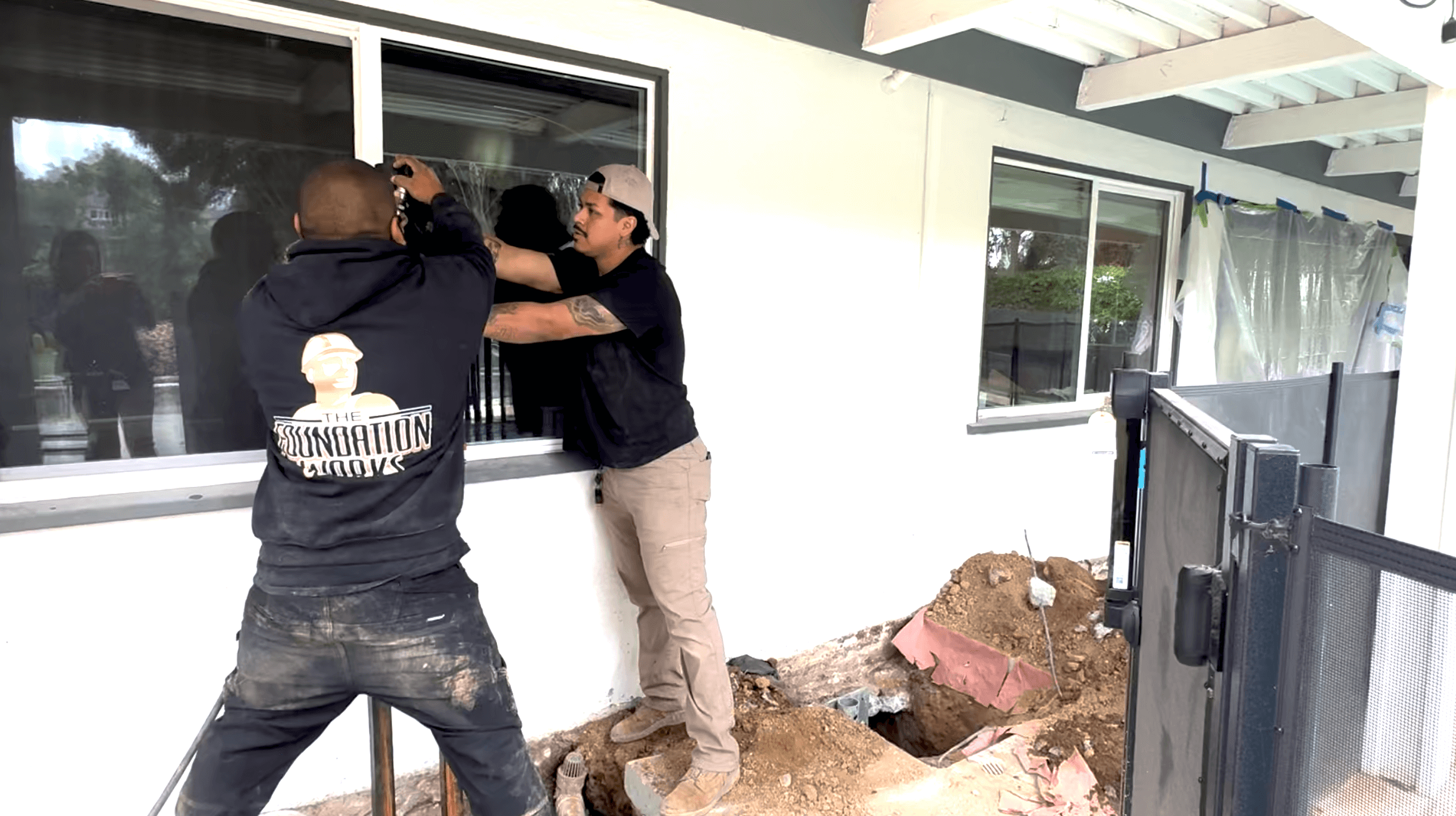
When it comes to repairing a foundation that has excessive settling and is disrupting a home’s structural integrity, the approach varies significantly depending on the type of foundation your home has. Concrete slab foundations typically require methods like slab jacking or the use of push piers to lift and stabilize the entire slab. On the other hand, homes with crawlspaces or raised foundations offer easier access for repairs, allowing for beam adjustments, pier reinforcement, or moisture control measures.
Understanding these differences is crucial for effectively addressing foundation issues and ensuring the long-term stability of your home. In this guide, we’ll explore the specific techniques used for both types of foundations and provide practical advice for maintaining a solid foundation.
Concrete Slab Foundation Repair
Access and Inspection:
Limited Access: Since a slab foundation is a solid, continuous concrete surface, accessing the areas needing repair is more challenging. Problems like cracks or settlement are typically assessed from above the slab.
Inspection Techniques: Inspection often involves looking for signs like cracks in the walls and floors, uneven flooring, and doors or windows that don’t open properly.
- Slab Jacking: This involves injecting a grout mixture under the slab to raise it back to its original level. This is effective for minor settlement issues.
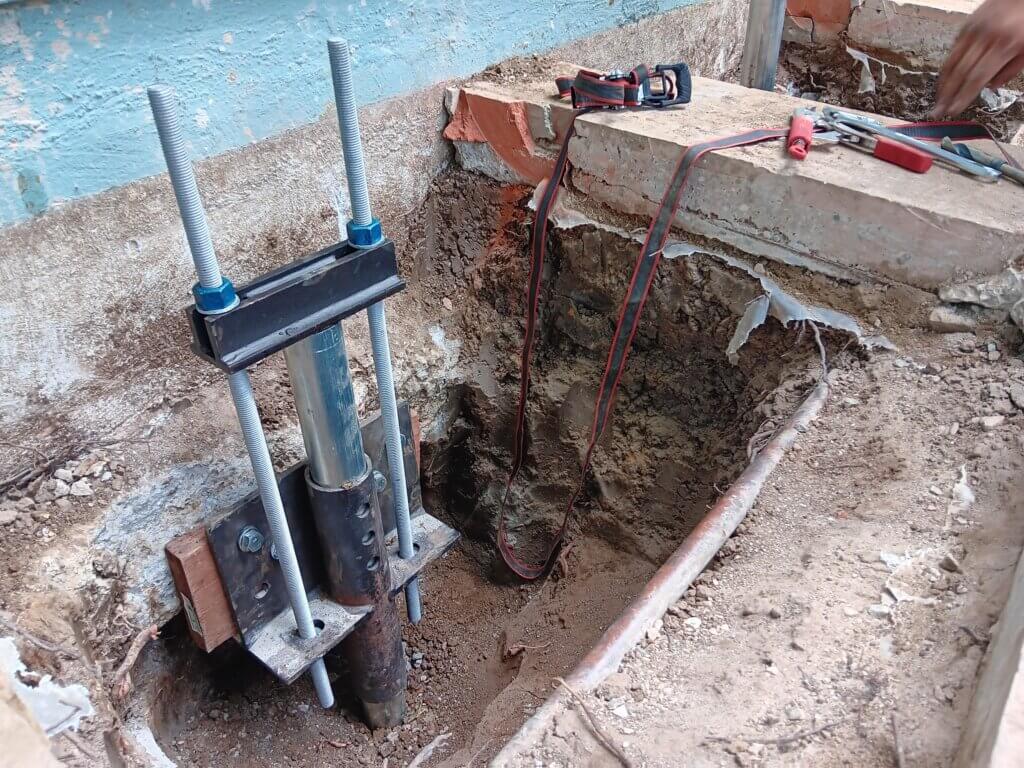
- Push Piers: For more severe issues, steel push piers or concrete pilings can be driven into the ground beneath the slab to provide support. This helps stabilize and lift the slab back into place.
- Crack Repair: Cracks in the slab can be filled with epoxy or polyurethane injections to prevent further damage and water intrusion.
Crawlspace or Raised Foundation Repair
Access and Inspection:
- Easy Access: Homes with crawlspaces or raised foundations have accessible areas beneath the house, making it easier to inspect and repair the foundation.
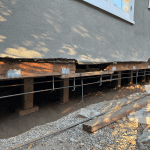
- Inspection Techniques: Inspections involve assessing the interior of the building for sloping floors, cracks in walls and ceilings and also going into the crawlspace to check for issues like rotting beams, moisture problems, and deteriorated foundation walls and cracking in foundations.
Repair Methods:
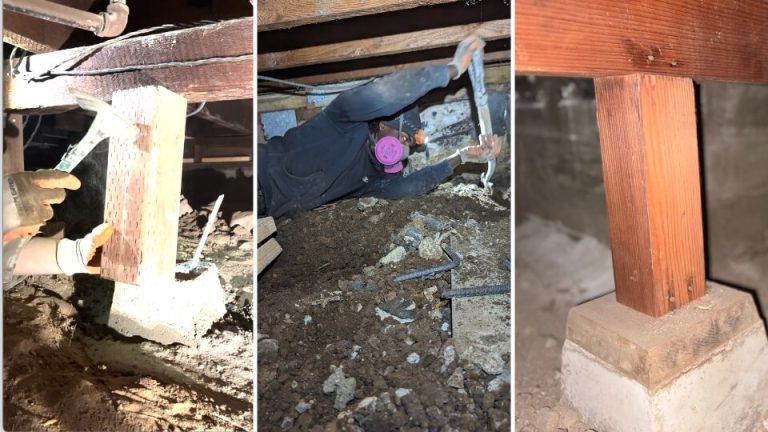
- Shimming and Replacing Beams: Sagging girder beams can be shimmed for additional support or replaced entirely if they are too damaged.
- Post and Pier Adjustment: The post and piers that support the beams can be adjusted, replaced, or supplemented with additional post and piers to provide more stability.
- Moisture Control: Addressing moisture issues by improving drainage and adding ventilation can prevent future foundation problems.
