




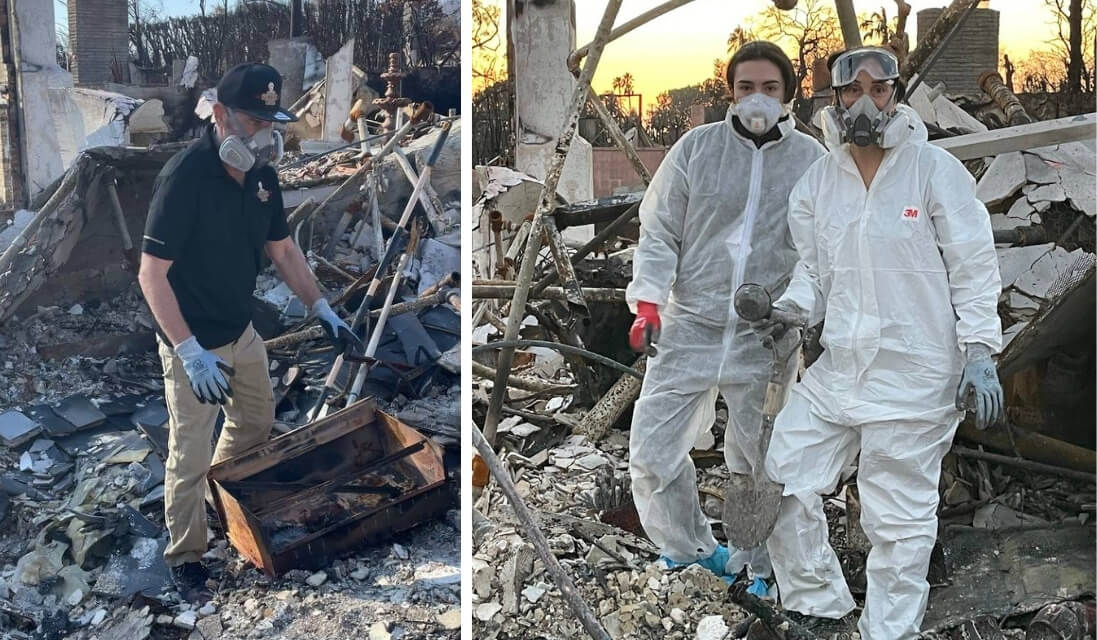
For property owners who lost their homes in the recent devastating fires in the Los Angeles area, the path to recovery can be overwhelming. Pictured above are the before and after photos of our friends’ Sunset Blvd home that was destroyed in the Pacific Palisades wildfire.
Amid the loss and the many hopes to rebuild, an important question has emerged: should a new home be constructed on a foundation that has been impacted by fire and heat? Can it be?
Rebuilding a home is not just about restoring a structure—it’s about reclaiming a sense of stability and security. Whether you’re considering rebuilding or not, understanding the condition of your foundation is a crucial step in moving forward.
This guide provides essential information to help you make an informed decision during this difficult time.
How Fire Affects Concrete Foundations
Concrete is known for its durability, but when exposed to extremely high temperatures, its structural integrity can be significantly compromised. Here are the key ways fire affects concrete:
1. Loss of Strength
- At temperatures above 300°F (150°C), concrete begins to lose its strength.
- By the time temperatures reach 1,100°F (600°C), concrete can lose 50% or more of its original strength, making it structurally unreliable.
2. Spalling
- When exposed to intense heat, moisture trapped within the concrete expands, causing the surface to crack and break off in chunks. This process, known as spalling, weakens the overall structure and increases the likelihood of further damage.
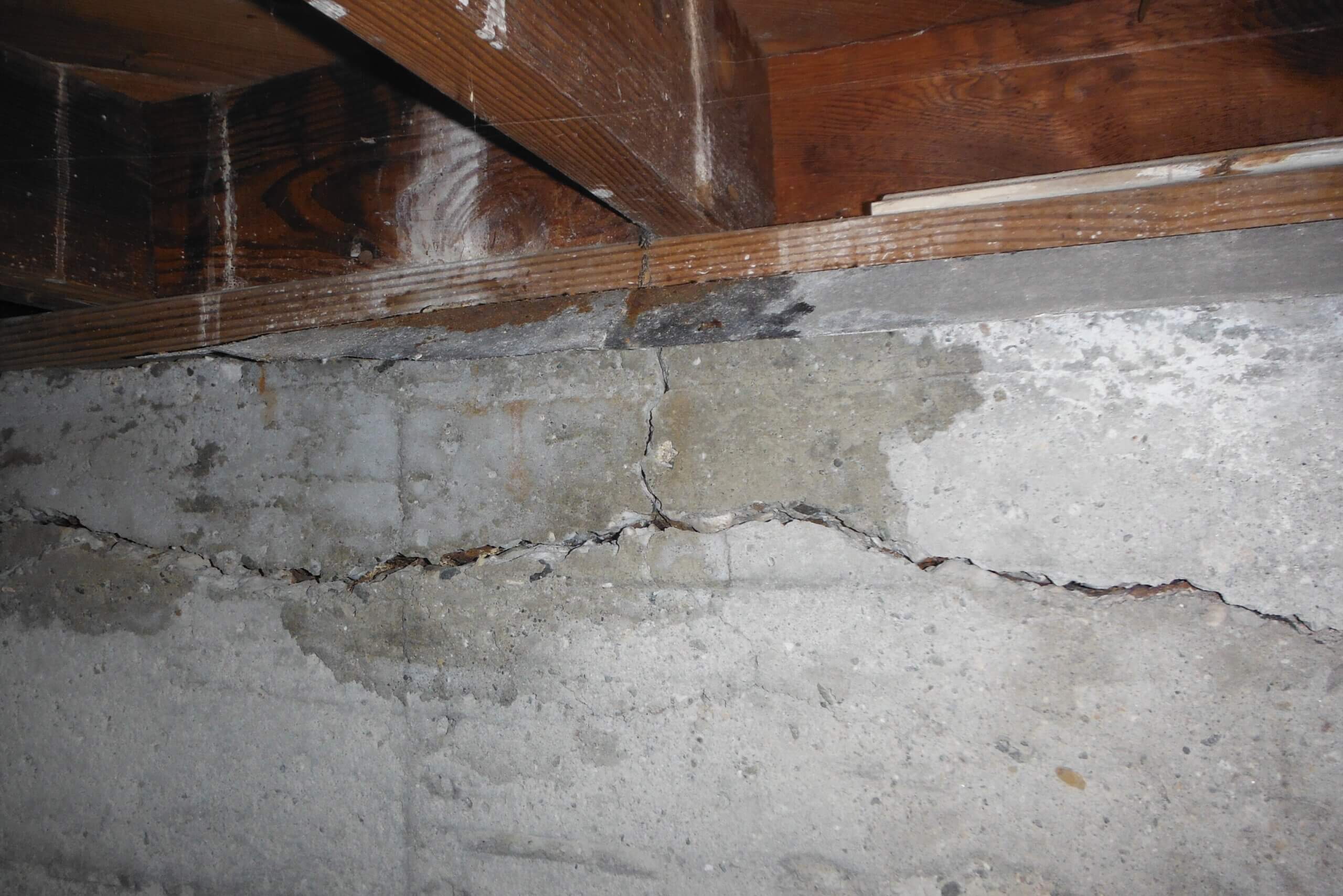
3. Color Changes
Fire exposure can cause visible color changes in concrete, often turning it pink, red, or gray. These color changes are indicators of thermal damage and are a sign that the foundation needs further evaluation.
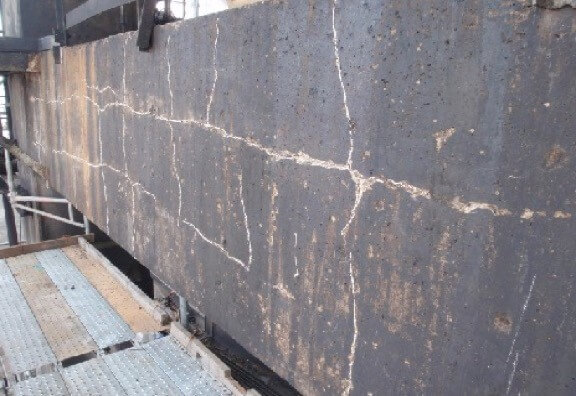
4. Microcracking
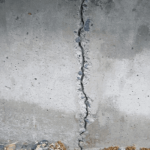
Extreme heat can lead to the formation of tiny internal cracks, commonly referred to as microfractures, that aren’t always visible to the naked eye. These cracks reduce the durability of the concrete and make it more susceptible to water damage and future deterioration.
2. How Fire Affects Reinforcing Steel (Rebar)
Reinforcing steel embedded within the concrete is also vulnerable to extreme heat, which can significantly weaken the foundation’s overall stability. If you think of the rebar as the skeletal structure of the foundation, the potential instability brings the usability of the entire foundation system into question.
1. Loss of Strength & Elasticity
- Rebar begins to lose strength at around 1,100°F (600°C) and can melt at approximately 2,500°F (1,370°C).
- This loss of strength compromises the foundation’s ability to bear loads and withstand external forces, including future seismic events.
2. Thermal Expansion
- As steel heats up, it expands. This expansion can create internal stresses within the concrete, leading to cracks or separation between the concrete and rebar.
3. Loss of Bond Strength
- Extreme heat can weaken the bond between the rebar and the surrounding concrete, reducing the foundation’s stability. Without a strong bond, the foundation may not be able to support the structure effectively.
3. How to Determine If Your Foundation Needs Replacement After Exposure to Fire
Before deciding whether to reuse or replace a fire-damaged foundation, a thorough professional evaluation is necessary. A structural engineer can assess the damage using advanced testing methods such as:
- Core Testing: Extracting core samples of the concrete to evaluate internal damage and strength.
- Ultrasonic Testing: Using sound waves to detect internal defects, cracks, and areas of weakened concrete.
These assessments provide critical data as to whether the foundation remains structurally sound, or if full or partial replacement is required.
While The Foundation Works does not offer these particular types of invasive inspection techniques, some of our past clients have worked with Partner Engineering and Science, Inc., a trusted structural engineering firm operating across all 52 states. Known for their thorough evaluations, they are often recommended by banks during refinancing to conduct comprehensive engineering analyses of buildings.
As with any company you’re considering, be sure to do your research, read reviews, and seek recommendations before making your decision.
4. Consider Resale Value and Market Perception After the Los Angeles Fires
Even if an engineer determines that the foundation is structurally sound, property owners should consider the potential impact on resale value. Buyers may be hesitant to purchase a home built on a fire-damaged foundation due to perceived risks or stigma. We highly recommend consulting with your real estate agent, as resale value and market perception are their expertise.
As a simple analogy — a vehicle that has been titled as “salvage” at any point and then fully restored to even seemingly new condition, is yet still often considered to be worth less than the exact same make that does not carry that “salvage” history in its provenance.
Similarly, a home built on a previously fire-damaged foundation, even with professional repairs and certifications, may carry a lasting stigma in the eyes of buyers, much like a salvage title car, ultimately affecting its long-term value and market appeal.
Addressing these concerns upfront and providing documentation of professional foundation inspections can help mitigate negative perceptions, but replacement may be the better option for long-term marketability. This decision will be unique to each property, and each property deserves specific consideration versus a “blanket assessment.”
What's the Best Decision to Make When Rebuilding a Home Affected By Fires?
The decision to replace or reuse a fire-damaged foundation should never be made without a professional assessment. Fire can cause significant hidden damage to concrete and rebar, leading to long-term structural issues if not properly addressed.
By consulting a structural engineer and weighing the potential resale implications, property owners can make a more informed decision that prioritizes safety and durability, as well as implications on market value.
If a foundation replacement is deemed necessary, which will be the case for many homes affected by the recent fires, the creation of a new foundation system will be factored into the design plans for the creation of the entire new building. At that stage and if you desire, The Foundation Works can be available to collaborate with the structural engineer and general contractor (home builder) of record to initiate the foundation portion of the rebuilding process.
We hope this information has been helpful to you. There are many variables such as the age of concrete, depth of foundation, temperature reached adjacent to it, and even the amount and type of cement, sand, and aggregate in the concrete itself. In short, the foundation that likely matters most to you is YOURS, and each will have its own set of variables.
As such, our hope is to have provided you minimally a guiding amount of information so that you can see the process of where to begin in terms of logical next steps.
Our hearts and prayers go out to you and yours,
We are only as valuable as we can serve, so please feel free to reach out if we can be of any service to you.
**The Foundation Works provides complimentary foundation inspections for owner-occupied homes not on the market to be sold in any of our service areas. However, specific to the many recent homes affected by fires, there are preliminary tests that would need to be performed prior to our inspection. See text above for details.
