





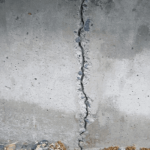
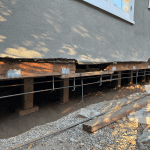

As foundation repair experts, we deal with tons and tons of old concrete left over from completed job site projects. Because concrete is heavy, often takes up space, and can be difficult to transport, many companies dump this type of waste from construction jobs in landfills. That’s what we used to do until we devised a better plan.
We are now building our own infrastructure that allows progressively more and more clean waste and debris from our job sites to be re-purposed for water capture and erosion control. Other materials, such as chipped-up lumber scraps, paper, cardboard and landscape foliage, get turned into nutrient-rich soil using Sustainable Permaculture techniques and the benefit of time.
If you book a foundation repair job with us in the Los Angeles area, our service includes cleaning up and disposing of all job-related waste. If you happen to have a different project going on such as a driveway repair, or have concrete removed as part of a drainage repair project, you may have options on what to do with the concrete waste that’s left behind.
In this article, we’d like to share some ideas on reusing broken, old, or leftover concrete with a few do-it-yourself projects or small jobs that you can do or hire a professional to complete for you. We believe that it’s a good idea to keep as much material as possible out of the landfill, and with concrete’s durability and versatility, it is a great candidate for re-use and a nice way to start your own sustainable garden, help keep water away from your foundation, etc.
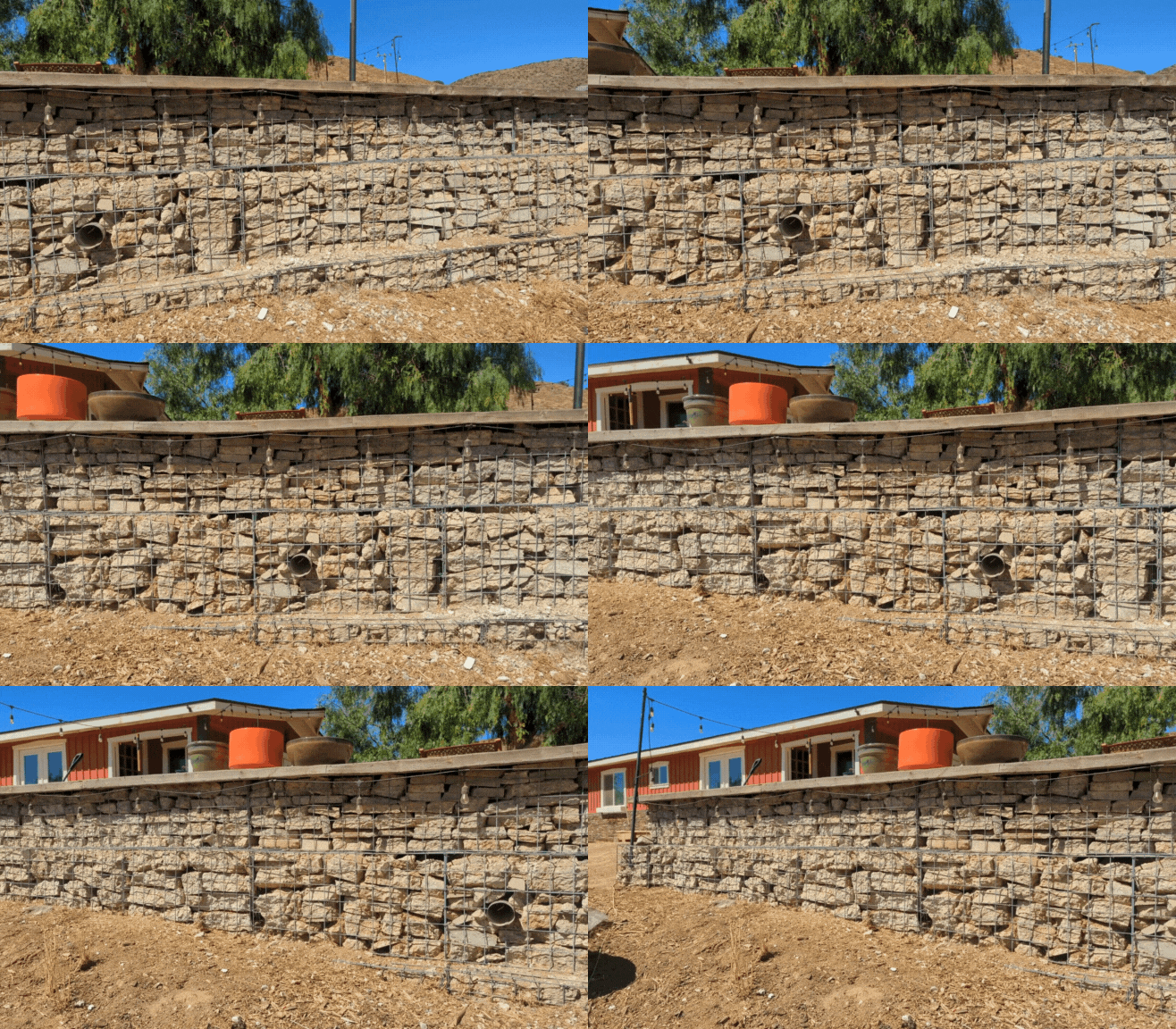
1. Create a gabion wall using old concrete.
Up at our ranch in Acton, CA, where we do our best to put the principals of Sustainable Permaculture to practice, we built a decorative seating gabion wall out of concrete pieces from previous job sites. By reusing broken concrete, rather than dumping it in a landfill, we are shifting towards a lifestyle where we produce less waste. This is considered an easy DIY project, as many homeowners have been able to successfully pull it off. You can follow this how-to video showing you how to build a gabion wall.
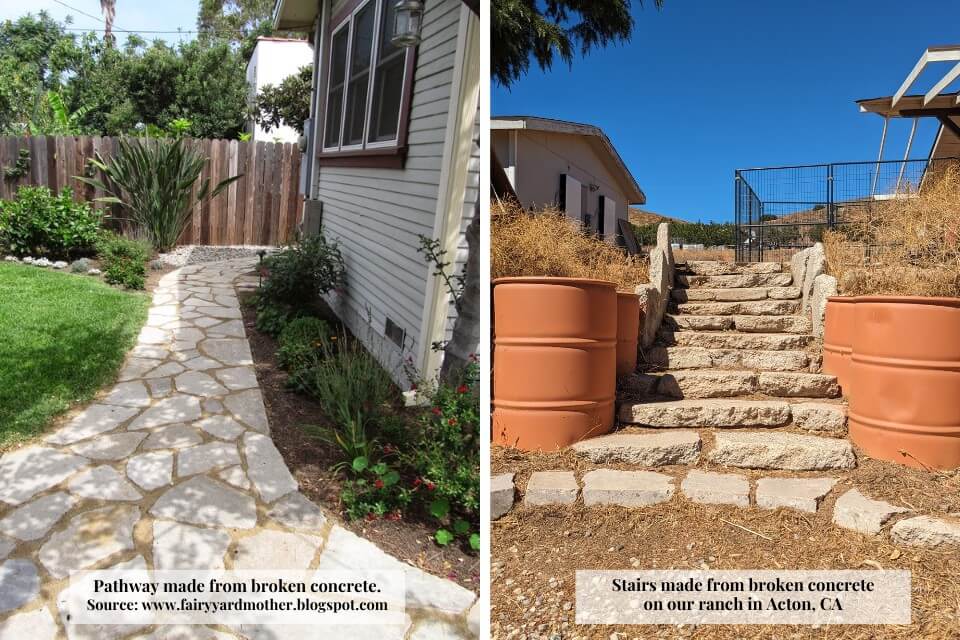
2. Use broken concrete to create a pathway or stairs.
Typically, when concrete is left over from a construction project there are plenty of large and uniquely shaped pieces that can be used to create an urbanite (broken concrete) pathway that resembles flagstone. Because the pieces are oddly-shaped, you can arrange them the way you would a puzzle. The result—a beautiful pathway that can improve the look of your backyard, garden or patio. We searched around and found this video to be helpful if doing this project yourself for less than $100. At our ranch in Acton, we’ve repurposed some broken concrete to make a stairwy.
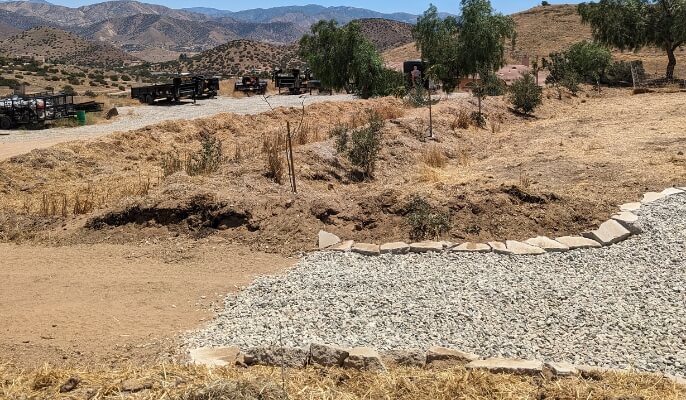
3. Reuse broken concrete pieces for edging.
Concrete pieces can also be used to edge raised garden beds or paths. In the photo above, we used concrete pieces from old job sites to edge our graveled walkways at our ranch. This helps keep the gravel contained in the path and borders the areas where our future vegetation will grow. Eventually, we will be able to create our own gravel out of much smaller concrete pieces as well.
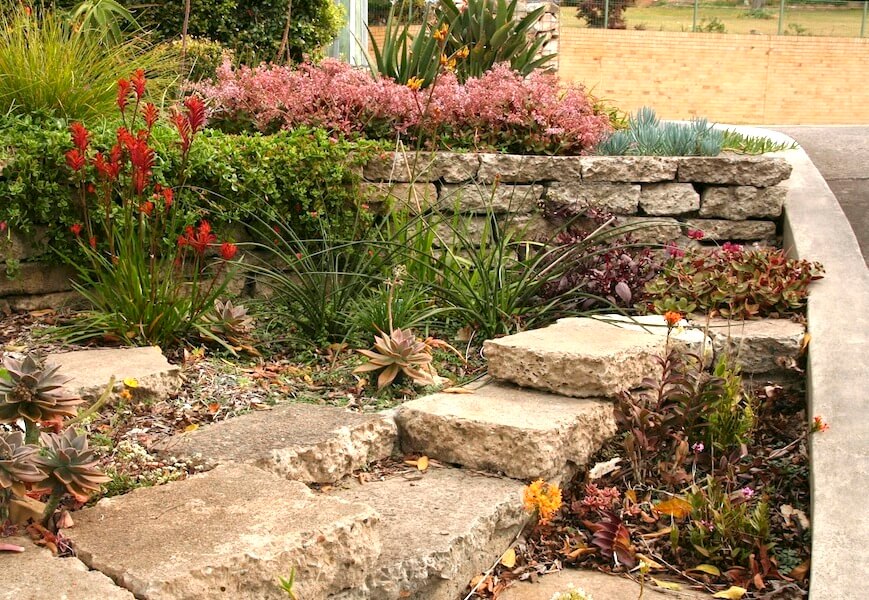
4. Have a planter wall built from your old concrete.
Another way to upcycle your old concrete is to have a terraced planter wall built using the concrete pieces. When done correctly, planter walls made from old concrete can make for a beautiful addition.
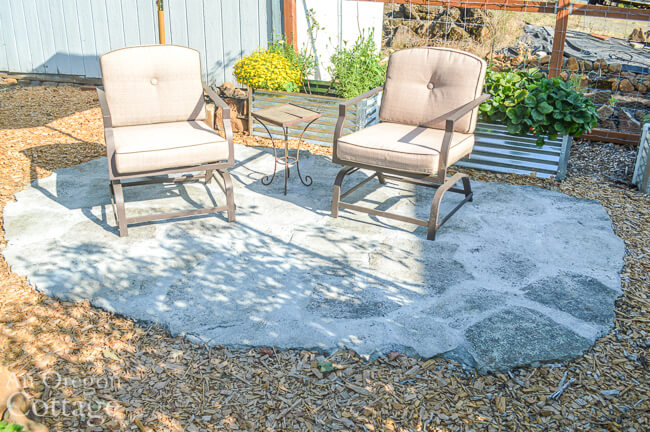
5. Create a garden patio using concrete pieces.
With some extra time on your hands and a bit of work, you can create your own garden patio with your leftover broken concrete pieces. Check out this short video on how to do it for less than $10, not including the blood, sweat and tears that will be involved.
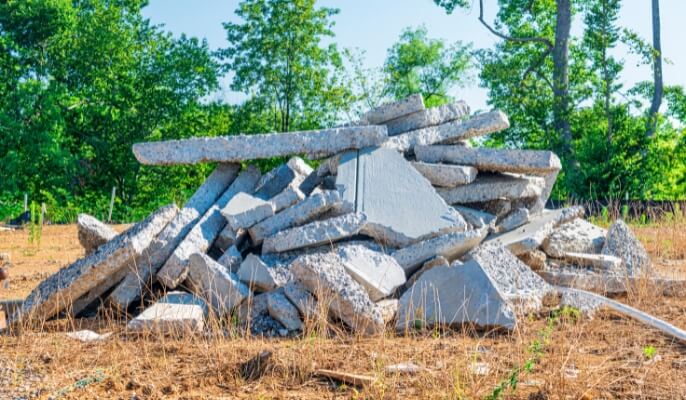
6. Are you critter friendly? A pile of old concrete makes a great home for squirrels, rabbits and lizards.
If you enjoy seeing nature’s critters in your yard, this idea may be the easiest of all! By having done it first-hand here on our own “back lot,” we’ve come to realize that a pile of used concrete chunks can be covered in a layer of good soil, forming a place for planting, but equally important, it looks like a high-rise luxury condo to the lizards, squirrels, rabbits, and whoever else shows up looking for a safe harbor. We know all these creatures serve a purpose, and if you feel the same way, you can cover a pile of old concrete chunks with soil and seed it with wildflowers, grass or cover crops, and soon your grateful “yard crew” critters will populate the various gaps and paths and voids within the pile.
Your concrete pile can end up as a beautiful, unexpected mound of green, and double as a habitat for critters. This is great if you enjoy the various creatures that can animate an otherwise “still” space. Consider using a horizontally placed 4’ diameter piece of pipe near the base to create a clean tunnel point of entry if you want to add a bit of whimsy! Tip! A wood pallet covered with soil creates a similar effect. It becomes like a subterranean parking structure that will eventually disintegrate and go back to earth. This is a great way to re-purpose a pallet!
Eco-friendly ways to dispose of old concrete.
Not particularly in the mood to take on any projects, but still want to produce less waste? Here are a few things you can do to get rid of old concrete:
- Give it away. Take a picture of your pile of concrete and post it on Craigslist or Facebook Market. You may be surprised at the number of people willing to pick up your old concrete for their own projects.
- Contact a landscape material company that may accept your old concrete for a small fee. These types of companies usually have equipment to crush concrete to make gravel or for other uses.
- Reach out to sustainably-minded landscaping companies who will pick up your old concrete to make retaining walls or use it in other landscaping designs.
- Find a non-profit or community garden that may want to employ one of the above techniques or some other use for it.
There are plenty of ways to reuse old concrete after a construction project. Which one do you like best? Comment below!
*The videos and articles linked in this article are intended to illustrate some of the simplest ways to carry out the ideas mentioned above. Because there can be a varying number of ways one can complete a project as well as various interpretations on practicing techniques of Sustainable Permaculture, The Foundation Works is not in any way endorsing the channels, content, methods, ideology, or the creators themselves by linking to outside material.
